Sewer Camera Inspection in Broward County
A sewer camera inspection sends a camera on a push rod along the line from a cleanout while a surface locator marks the position and depth of any defect. The output is recorded footage naming the defect and its distance — the difference between a quote for known conditions and a quote for someone's uncertainty.
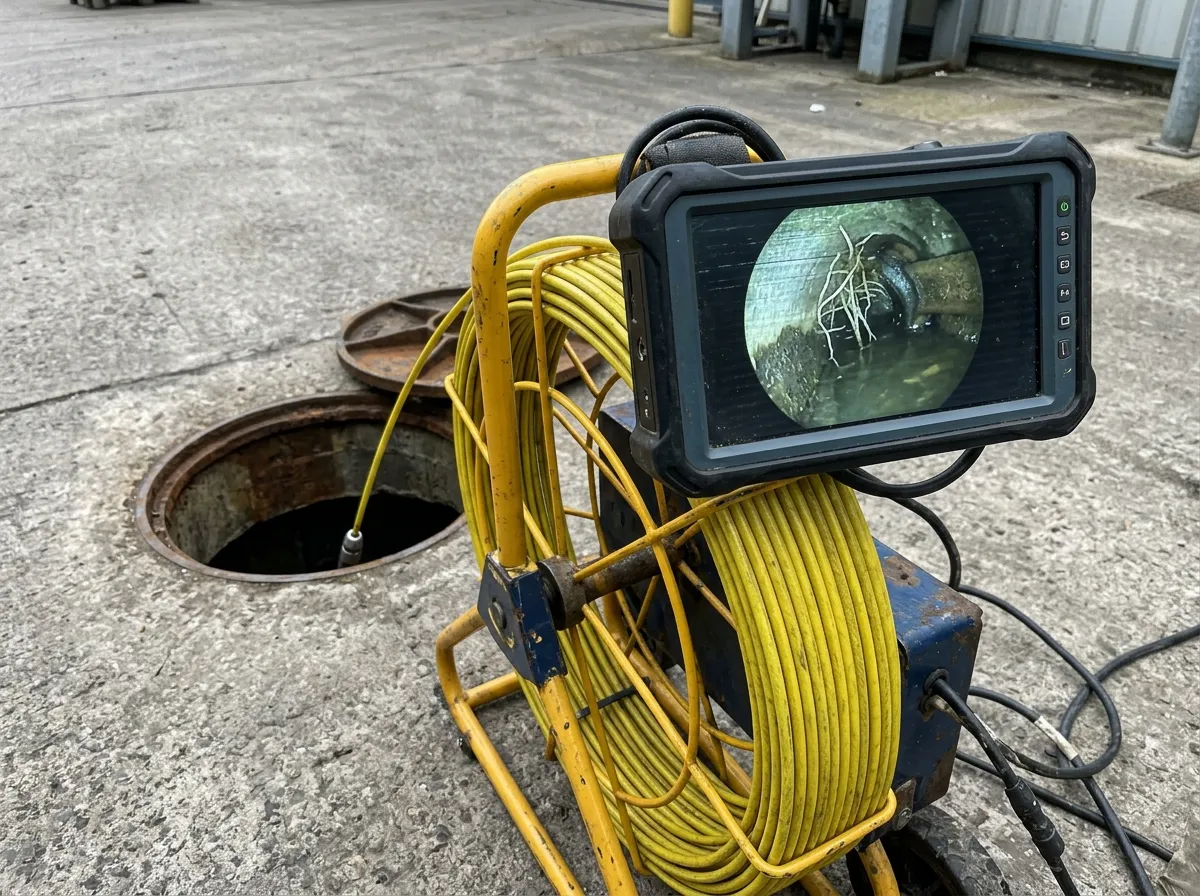
The cheapest step in sewer work, and the one that determines every number after it.
What the inspection produces
A self-levelling camera head on a semi-rigid push rod enters through an existing cleanout and travels the line while a footage counter records distance. The head carries a sonde, and a surface locator picks it up — which is how a defect thirty-four feet down the line becomes a spray-painted mark on the lawn with a depth beside it.
Without that locate, a repair crew digs on an estimate. With it, the trench goes where the pipe is.
What a report should name
- Belly or sag — a low section holding standing water
- Offset — sections shifted apart at a joint
- Crack or fracture — a through-wall break, distinct from surface scale
- Root intrusion — roots entering through an existing opening
- Channelling — the bottom of a cast iron pipe corroded into a trough
- Scale — corrosion buildup narrowing the bore
- Collapse — the pipe no longer holding shape
“The line is bad” is not a finding. “Offset at 34 feet, five feet deep” is.
| What the report should say | What it should not say |
|---|---|
| “Offset at 34 ft, 5 ft deep” | “The line is bad” |
| “Belly between 15 ft and 34 ft, holding water” | “It looks old” |
| “Roots entering at a joint, 22 ft” | “There is root damage” |
| “No cracks, offsets or root intrusion found” | (silence on what was ruled out) |
Rust is not a diagnosis
Fifty-year-old cast iron looks alarming on video — dark, rough, heavily scaled — and it is easy to read that as terminal. Surface corrosion is the expected condition of the material at that age and does not by itself indicate lost wall.
A plumber reading exactly that kind of footage showed what a fair assessment sounds like: “Looks like a sag in the line between 15’ and 34’. Or it may be very flat and needs to be flushed and jetted. I didn’t see any cracks, offsets, or root intrusion.” An old pipe, reported as serviceable, with one specific concern and an explicit list of what was not found.
Access, and the case for a cleanout
If no exterior cleanout exists, access is through a pulled toilet or a roof vent. A toilet gives good access to the main run; a vent entry is awkward and sometimes impossible past traps and fittings. On older Broward houses without one, installing a cleanout is genuinely useful — it makes every future service call cheaper and faster.
The footage belongs to the homeowner
The standing complaint in this trade is that a diagnosis doubles as a sales tool. One homeowner’s answer was to hire a scope-only inspector “NOT part of a plumbing company.” That works. The simpler version is to require the recorded file from whoever runs it, since a recording can go to a second contractor for an independent read.
On pipe bursting, Florida’s Building Code makes a camera survey of the completed section mandatory and subject to the code official’s approval — so on that job the post-work run is an obligation, not a courtesy.
“The homeowner watches the monitor with us and keeps the file. If the line is fine, we say the line is fine.”
To have your line scoped, located and recorded, request a free quote.
Frequently asked questions
Can a sinking spot in the yard mean a broken sewer line?
Yes, and it is one of the clearest signs. When a line breaks below grade, sandy fill washes into the pipe and is carried away, leaving a void that settles at the surface. A depression following the line's route toward the street warrants a camera inspection.
Related services
- Sewer Camera Inspection Cost and What the Footage ShowsA residential sewer camera inspection typically costs $150 to $400. A camera on a push r…
- Broken Sewer Line: The Signs, and What They Look Like in FloridaA broken sewer line shows itself through repeat backups, a persistent sewer smell at flo…
- Cast Iron Pipe Repair: When a Section Can Be SavedCast iron can be spot-repaired when the defect is isolated and the surrounding pipe stil…
- Sewer Line Repair in Broward CountySewer line repair covers everything from clearing a blockage to replacing a failed secti…