Sewer Pipe Lining in Broward County
Sewer pipe lining cures a resin sleeve inside the existing pipe, forming a jointless new pipe within the old one and avoiding the trench. It works on corroded pipe that still holds its shape and grade, and it does not work on a bellied, offset or collapsed line at any price.
Lining is the highest-value repair available to a Broward homeowner with old cast iron, because it removes the part of the job that costs the most: getting to the pipe.
What happens on site
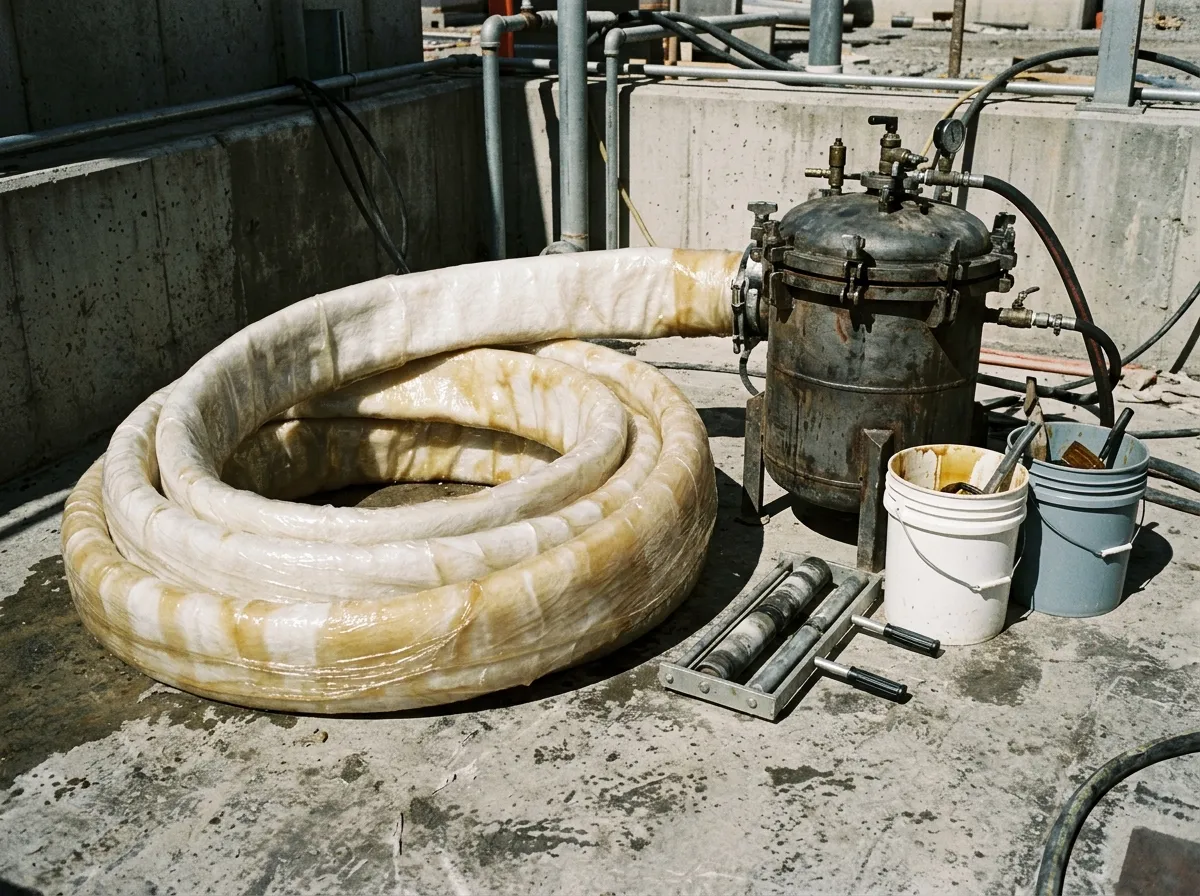
A felt or fiberglass sleeve saturated with thermosetting resin is pulled or inverted into the host pipe through an existing cleanout, inflated against the pipe wall with air or water, and cured — with ambient heat, hot water, steam, or ultraviolet light. Lateral connections are reopened with a robotic cutter and the finished bore is re-scoped. A residential lateral is usually a one- or two-day job.
The finished liner is typically 3 to 6 mm thick, so a lined 4-inch line loses a little diameter. Because the new surface is smooth where the cast iron it replaced was scaled and rough, flow in practice is generally equal or better.
The eligibility gate
| Host pipe | Linable? |
|---|---|
| Corroded, scaled, cracked, still round and correctly graded | Yes |
| Roots at joints, pipe otherwise sound | Usually, after jetting and cutting |
| Bellied or back-pitched | No — lining preserves the existing grade |
| Offset joint | No — a liner cannot cure across a step |
| Collapsed | No — there is no host pipe left |
| Bottom corroded away | Case by case, on remaining wall |
The rule, as a working plumber stated it: “You can only do trenchless if your sewer line has correct pitch and is mechanically sound.” A lining quote issued before the line has been camera-inspected is a quote for something nobody has confirmed is possible.
The objection worth answering
The sharpest criticism of lining comes from within the trade: “If cast iron did not stop those roots what makes you think a liner will?”
A cured liner is jointless, and roots enter at joints and cracks, so along the lined run the entry points cease to exist. The objection still lands where coverage is partial — a liner covering thirty of fifty feet leaves twenty feet of original joints, and one terminating short of the connection at the main leaves the most root-prone joint in the system untouched.
So the questions that matter are about coverage: total lateral length, where the liner starts and ends, what happens at the connection, and whether the warranty covers the whole line or only the lined section.
What we do not claim
Florida’s Building Code sets out an explicit path for trenchless pipe bursting — HDPE, SDR 17, ASTM F714, with the completed section inspected internally by video camera survey and approved by the code official. We have not verified an equivalent residential CIPP approval path in the Florida Building Code, and this page does not assert one. Where a permit is involved, that question belongs to a Broward plans examiner and the answer should be in writing.
“If the footage shows a belly, we say replace. Lining it would be the easier sale and it would leave the standing water exactly where it is.”
To find out whether your line is a lining candidate, request a free quote.
Related services
- CIPP Pipe Lining: How Cured-in-Place Lining Works and When It Does NotCIPP lining pulls a resin-saturated felt sleeve into an existing sewer pipe, inflates it…
- Trenchless Sewer Repair Cost and Whether Your Line QualifiesTrenchless sewer repair cost prices against the excavation it avoids, since the method r…
- Cast Iron Pipe Replacement for South Florida HomesCast iron drain replacement swaps original 1960s and 1970s pipe for PVC to current Flori…
- Sewer Camera Inspection Cost and What the Footage ShowsA residential sewer camera inspection typically costs $150 to $400. A camera on a push r…